| Street | Section | Old limit, km/h | New limit, km/h |
|---|---|---|---|
| Al Asayel Street | Oud Metha St → Al Meydan St | 60 | 80 |
| Al Mustaqbal Street | Sheikh Rashid St → Al Meydan St | 60 | 70 |
| Latifa bint Hamdan Street | Sheikh Zayed Rd → Al Khail Rd | 60 | 70 |
| Al Rebat Street | Marrakech St → Sheikh Mohammed bin Zayed Rd | 100 | 90 |
| Sheikh Sabah Al Ahmad Al Jaber Al Sabah Street | 2nd December St → Khalid bin Al Waleed St | 80 | 70 |
Speed Limit in Dubai 2026: Roads, Radars, Fines and New Limits from 1 November
Speed limit in Dubai 2026: 5 roads changing on 1 November, limits on E11, E311 and E611, radar rules in Dubai vs Abu Dhabi, and the speeding fine table.
Share:
Dubai speed limits on every main road, the five changes from 1 November, how radars differ in Dubai and Abu Dhabi, and what speeding costs — including in a rental car.
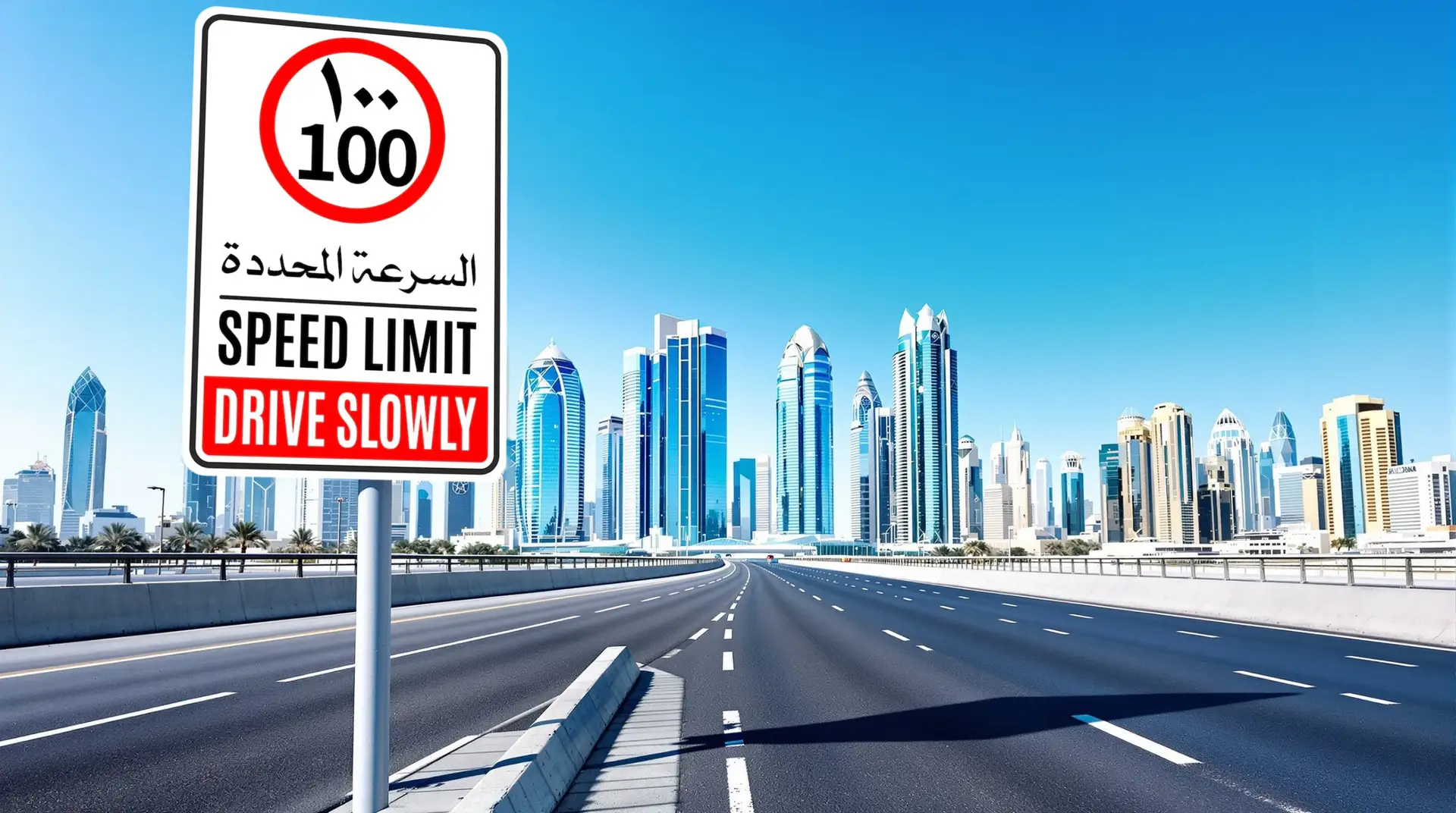
The speed limit in Dubai is the number on the sign, and from 1 November 2026 that number changes on five city streets. Three get faster and two get slower, under a revision approved by the RTA and Dubai Police as part of the Dubai Traffic Safety Strategy.
The sign is only half the story. In Dubai, speed cameras are usually set about 20 km/h above the posted limit. In Abu Dhabi there is no such margin: 1 km/h over the sign can already mean a fine. Drivers who cross between the two emirates on the same day get caught by exactly this difference.
Below you will find the current speed limit on each major Dubai road, the new limits, radar rules across the UAE, the full speeding fine table and what happens when a fine lands on a rental car. For lane discipline, seat belts and other rules, see our guide to Dubai traffic rules.
Limits and fines checked on 28 October 2026.
Short answer
The legal speed limit is what the sign shows. In Dubai, radars typically flash at the limit plus 20 km/h (100 km/h sign → 121 km/h), but this is a camera setting, not permission to drive faster. In Abu Dhabi there is no buffer. From 1 November 2026, limits change on five Dubai streets (table below). A speeding fine in Dubai ranges from AED 300 to AED 2,000, and from 51 km/h over the limit it also brings black points and vehicle impoundment.
New speed limits in Dubai from 1 November 2026
From 1 November 2026, the speed limit changes on these five Dubai streets:
The changes were authorised by the RTA and Dubai Police under the Dubai Traffic Safety Strategy, with the stated aim of improving safety and traffic flow.
For the first few weeks, trust the new signs on these streets rather than memory or your navigation app. Map apps may still show the old limit, and on Al Rebat and Sheikh Sabah Al Ahmad Street the old habit is now 10 km/h too fast.
Dubai roads speed limit: highways and main streets
Dubai Police lists two figures for each major road: the road speed (the limit on the sign) and the radar control speed (where cameras start recording). The table follows the Dubai Police street speed register; Al Rebat reflects the 1 November change.
| Road | Speed limit, km/h | Radar control, km/h |
|---|---|---|
| Sheikh Zayed Road (E11) | 120 / 100 (by section) | 141 / 121 |
| Sheikh Mohammed bin Zayed Road (E311) | 110 | 131 |
| Emirates Road (E611) | 110 | 131 |
| Dubai–Al Ain Road | 120 / 100 (by section) | 141 / 121 |
| Al Khail Road (E44) | 100 | 121 |
| Al Rebat Street | 100; 90 on Marrakech St → SMBZ Rd from 1 Nov 2026 | 121 / 111 |
| Hessa Street | 100 / 80 (by section) | 121 / 101 |
| Umm Suqeim Road | 90 | 111 |
| Jumeirah Road, Al Wasl Road | 70 | 91 |
| Palm Jumeirah | 60 | 91 |
Speed limit on Sheikh Zayed Road (E11)
The E11 speed limit is 120 km/h on some stretches and 100 km/h on others, so the number changes along a single drive. The radar control speed follows: 141 or 121 km/h. If you are unsure which stretch you are on, the lower figure is the safe one.
E311 and E611 speed limit
Inside Dubai, the Sheikh Mohammed bin Zayed Road speed limit (E311) and the E611 speed limit (Emirates Road) are both 110 km/h, with radars set at 131 km/h. The same E311 continues into Abu Dhabi as Sheikh Mohammed bin Rashid Road, where different rules apply (next section).
Limits for parking areas, residential streets and service roads are not in the register we used, so we give no figures for them here: follow the sign.
Radar in Dubai vs Abu Dhabi: is there a buffer?
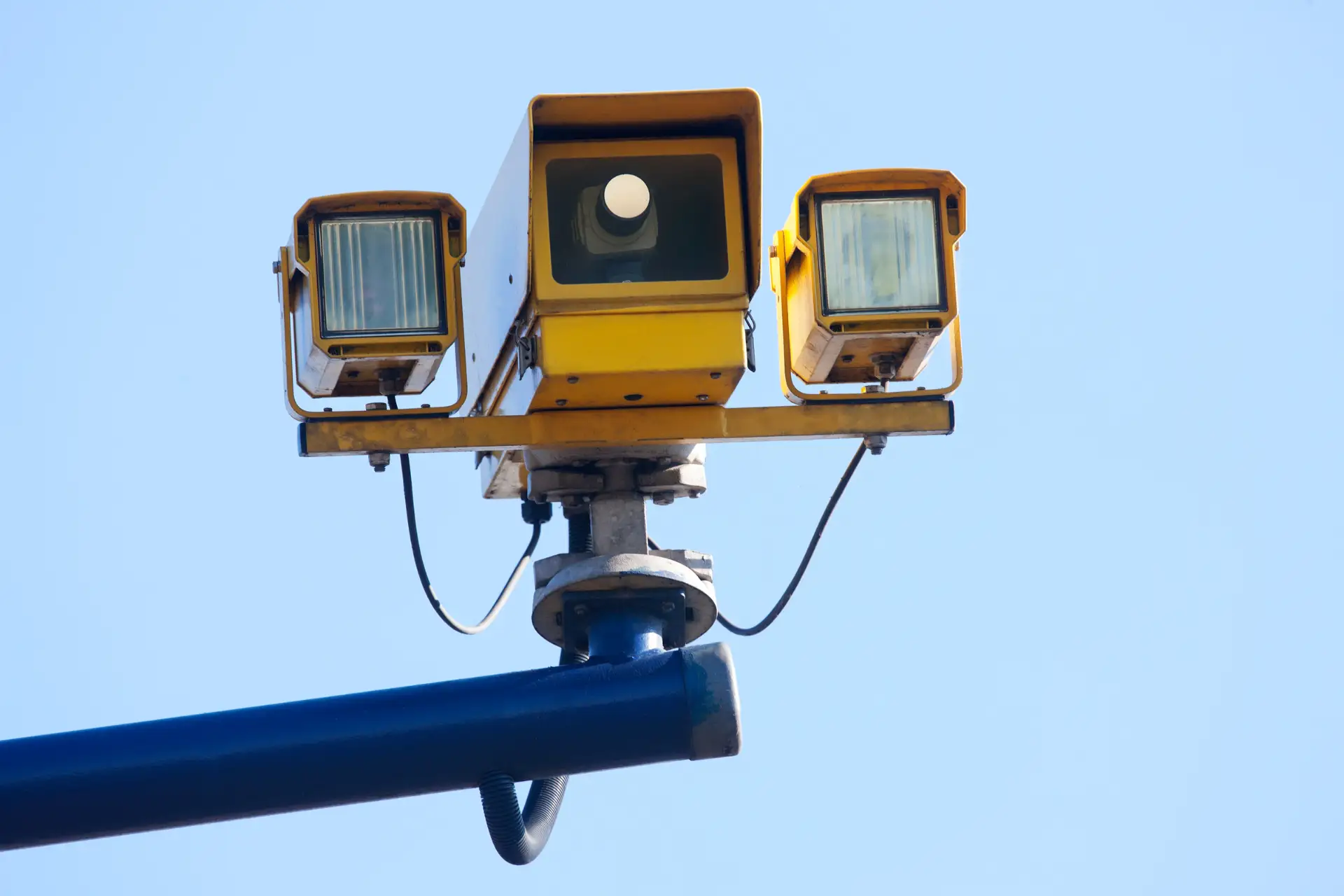
Dubai. Radars in Dubai are usually set at the speed limit plus about 20 km/h: at a 100 km/h sign, the camera records from 121 km/h. Gulf News (22 October 2026) calls this the typical radar control speed and warns that it is not permission to exceed the posted limit. It is a camera setting that is not fixed in law and can differ by road.
Abu Dhabi. There is no buffer. Abu Dhabi Police removed the 20 km/h grace margin on 12 August 2018, and radars now record any speed above the sign. Drivers should not assume any grace speed there.
Abu Dhabi rules that catch Dubai drivers
E311 in Abu Dhabi now has a 100 km/h stretch. From 14 September 2026, the limit between the At Turoush St / Tawi Al Qaymah St junctions and the Al Khayr St interchange dropped from 120 to 100 km/h, in both directions. At 101 km/h you are already over the limit.
The E311 minimum speed is gone. The 120 km/h minimum in the two left lanes, with a AED 400 fine, was removed in April 2025; the 140 km/h maximum stayed.
No Abu Dhabi road speed limit map replaces the signs: with zero tolerance, the number on the sign is the only safe reference.
Speed limit in UAE: Sharjah and the northern emirates
We found no official police register of road-by-road limits or radar settings for Sharjah, Ras Al Khaimah or Fujairah, so we do not quote them. Treat the sign as the limit. One recent change: from 13 October 2026, Fujairah Police cut the Fujairah–Khorfakkan Road limit from 120 to 100 km/h.
Speeding fine Dubai: amounts, black points, impoundment
The speeding fine depends on how far over the limit you were recorded. These are the speeding limits for fines as listed by Dubai Police:
| Over the limit by | Fine, AED | Black points | Impoundment |
|---|---|---|---|
| Up to 20 km/h | 300 | — | — |
| 21–30 km/h | 600 | — | — |
| 31–40 km/h | 700 | — | — |
| 41–50 km/h | 1,000 | — | — |
| 51–60 km/h | 1,500 | 6 | 15 days |
| 61–80 km/h | 2,000 | 12 | 30 days |
| More than 80 km/h | 2,000 | 12 | 30 days |
A Dubai speed camera fine follows this same table: the bracket is set by how far the recorded speed was over the limit. Where a road has a minimum speed, driving below it costs AED 400 and 4 black points.
Speeding is only one line in the UAE fine schedule: red lights, phone use and other offences are covered in our complete guide to RTA and Dubai traffic fines in 2026. Once a fine is issued, you can check and pay speeding fines online through Dubai Police channels.
Over speeding fine in Dubai in a rental car
A speeding fine on a rental car is registered to the car, so it reaches the rental company first, sometimes well after the car is returned. At Rentico the rules for this are written into the rental terms:
We tell you about every fine. Rentico notifies the customer of fines, tolls, parking fees and other charges linked to the car.
Processing fee depends on how fast you pay. It is a share of the fine, counted from the day we send the notification: 5% within 3 days, 10% within 4–10 days, 20% within 11–30 days, 30% after 30 days. On a AED 600 fine, that is AED 30 if paid in 3 days and AED 180 if paid after a month.
Black points carry a separate fee: AED 500 for each point. Black points start at 51 km/h over the limit (see the table above).
Impoundment costs extra. If the police impound the car, the customer covers towing and release costs, plus the daily rental fee for each day the car is unavailable.
The deposit is held up to 21 days after return to cover fines that arrive late. Deposits range from AED 1,000 to AED 10,000 depending on the car category.
Late fines can still be charged to your card, wallet, deposit or deposit-free guarantee.
Leaving the UAE needs written permission from Rentico before the rental starts.
Want the fine rules for your own rental before you drive?
Message us on WhatsApp with your dates and car. We will send the exact deposit, fine-processing terms and contract conditions for your booking, so there are no surprises when a radar flashes.
Ask on WhatsAppHow to avoid speeding fines
Read the sign on every stretch. The limit can change along one road (E11, Hessa Street, Dubai–Al Ain Road), and on five streets from 1 November 2026.
Use a navigation app with speed-limit and camera alerts, but check it against the signs while maps catch up with the new limits.
Reset cruise control when the limit drops, for example where a 120 km/h stretch of E11 turns into 100 km/h.
Drive to the sign, not the buffer. The Dubai radar margin is a setting, not a right, and it does not exist in Abu Dhabi.
Keep left lanes for overtaking. On roads with a minimum speed, driving too slowly is fined too (AED 400).
Conclusion
The speed limit in Dubai is the number on the sign; the radar margin of about 20 km/h is a camera setting, not extra allowance, and in Abu Dhabi there is none at all. Check the five streets that change on 1 November 2026. If a fine does arrive on a rental car, paying it within 3 days keeps the processing fee at its lowest.
Planning a drive to Abu Dhabi or the mountains?
Browse cars for city driving and long highway trips in the catalog.
Open the catalogFAQ
What is the speed limit on Sheikh Zayed Road?
The speed limit on Sheikh Zayed Road (E11) in Dubai is 120 km/h on some sections and 100 km/h on others. Radars are set at 141 and 121 km/h respectively. Always follow the sign for the stretch you are on.
What is the Dubai highway speed limit?
On Dubai's main highways, the limit is 100–120 km/h: 110 km/h on E311 and E611, 100 km/h on Al Khail Road, and 100 or 120 km/h on E11 and the Dubai–Al Ain Road. Radar control speeds are about 20 km/h higher.
Which speed limits change in Dubai on 1 November 2026?
Five streets: Al Asayel (60 to 80 km/h), Al Mustaqbal (60 to 70), Latifa bint Hamdan (60 to 70), Al Rebat (100 to 90) and Sheikh Sabah Al Ahmad Al Jaber Al Sabah Street (80 to 70). Each change applies to a specific section, listed in the table above.
Is there a 20 km/h speed buffer in Dubai?
In practice, yes: Dubai radars typically record from the limit plus 20 km/h, for example 121 km/h at a 100 km/h sign. It is a camera setting, not a legal allowance, and the posted limit is still the law.
Is there a speed buffer in Abu Dhabi?
No. Abu Dhabi removed the 20 km/h buffer in August 2018, so radars can record any speed above the sign. Since 14 September 2026, part of E311 in Abu Dhabi is limited to 100 km/h.
How much is a Dubai speed camera fine?
From AED 300 (up to 20 km/h over) to AED 2,000 (more than 60 km/h over, including more than 80 km/h). From 51 km/h over, the fine also brings 6 or 12 black points and 15 or 30 days of impoundment.
What happens if you exceed the speed limit in Dubai in a rental car?
The fine goes to the rental company, which passes it to you with a processing fee. At Rentico the fee is 5% of the fine if paid within 3 days and up to 30% after 30 days, plus AED 500 per black point.
Sources & References
- The National — Dubai sets new speed limits on five roads (21 Oct 2026)
- Khaleej Times — Dubai announces new speed limits on 5 major roads from November 1
- Gulf News — Dubai's new speed limits: radar grace thresholds and speeding fines (22 Oct 2026)
- Dubai Police — Traffic violations and black points
- Rentico — General Terms and Conditions
About the Author

Alex Carter
Travel & Mobility Expert
Dubai-based travel enthusiast with 5+ years of experience exploring the UAE by car. Passionate about helping tourists discover the best routes, hidden gems, and smart rental tips for unforgettable road trips.
10% off your first booking
Follow Rentico on social media for new routes, rules, and tips on living in and traveling around Dubai. Followers get 10% off their first booking.
Was this article helpful?
More on Guides
RTA Dubai Traffic Fines 2026: Complete Guide
Dubai traffic fine amounts for 2026: speeding, red lights, parking and Salik, black points, how to check and pay online, and fines on a rental car.
Rentico TeamHow to Get a Driving License in Dubai in 2026: Exchange, Golden Chance or From Scratch
How to apply for driving license in Dubai in 2026: exchange, Golden Chance or from scratch, RTA fees, minimum age and renewal fee explained.
Rentico Team